
Search Essex County Residents
Choose the narrowest official source that can answer the question. A property question starts with the municipality, street, or parcel identifiers. A dated historical question begins with a directory, census image, newspaper, probate file, or archival collection. A court question requires the right case family and a docket. The same name can appear in several records for different people, so a search should keep the municipality, address, date range, middle initial, document role, or parcel PIN beside the result.
Essex County records use different identifiers. A ZIP is a delivery geography, while a municipality is a civil jurisdiction. A block and lot are land-record and tax identifiers. A PAMS PIN is a parcel identifier. A ward or election district is an election boundary. None is a stand-in for every other field, and none alone proves current occupancy.
- Preserve the supplied name or address exactly, then note spelling variants, municipality, and a reasonable date range.
- For a location, use NJGIN or the municipal assessor to resolve the street, block, lot, and PAMS PIN.
- Use the Essex Register's PRESS index for recorded-document roles and dates, then inspect the instrument when a conclusion depends on it.
- For a historical trail, compare an annual directory with census, newspaper, map, probate, or Archives material.
- When no online index exists, request an existing, identified record from the custodian rather than asking for a custom person report.
Note: Record the source, query values, and access date before combining results from different systems.
Essex County Has 22 Record Doors
Countywide research begins with an important limit: Essex County contains 22 municipalities, and municipal records do not sit in one people database. The Register preserves land transactions across the county. Superior Court operates through the Essex Vicinage, while municipal courts remain tied to their own municipalities. Assessments are local, even though the Tax Board provides county coordination and assessor routing. For a recent vital event, the municipality of occurrence may matter as much as the county name.
This is why an address should be stabilized early. A civil municipality, USPS city, ZIP, block and lot, mapped parcel, ward, and historic enumeration district can describe overlapping but different geography. Keep each value in its own field. A long street can cross a municipal line, and a historical household may appear under a different ward or street form.
Numbers matter. The county's 22-municipality structure makes a broad name hit less useful than a name paired with a municipality, date, and second independent clue.
Find Parcels Before Names
NJ Property Explorer and NJGIN provide the map and assessment context that connects a street to stable parcel fields. Property Explorer describes address, owner display where permitted, block and lot, annual assessed land and improvement values, prior-year taxes, and classification. Its tax information can lag a later ownership change, so treat the parcel card as tax-year context, not a current title or occupancy statement.
The NJGIN Property Explorer is the state mapping entry point. County and municipal governments maintain source data, while the state composites it. The parcel polygons are not legal boundaries, and Daniel's Law can suppress owner names. A blank owner field therefore does not mean there is no underlying ownership record.
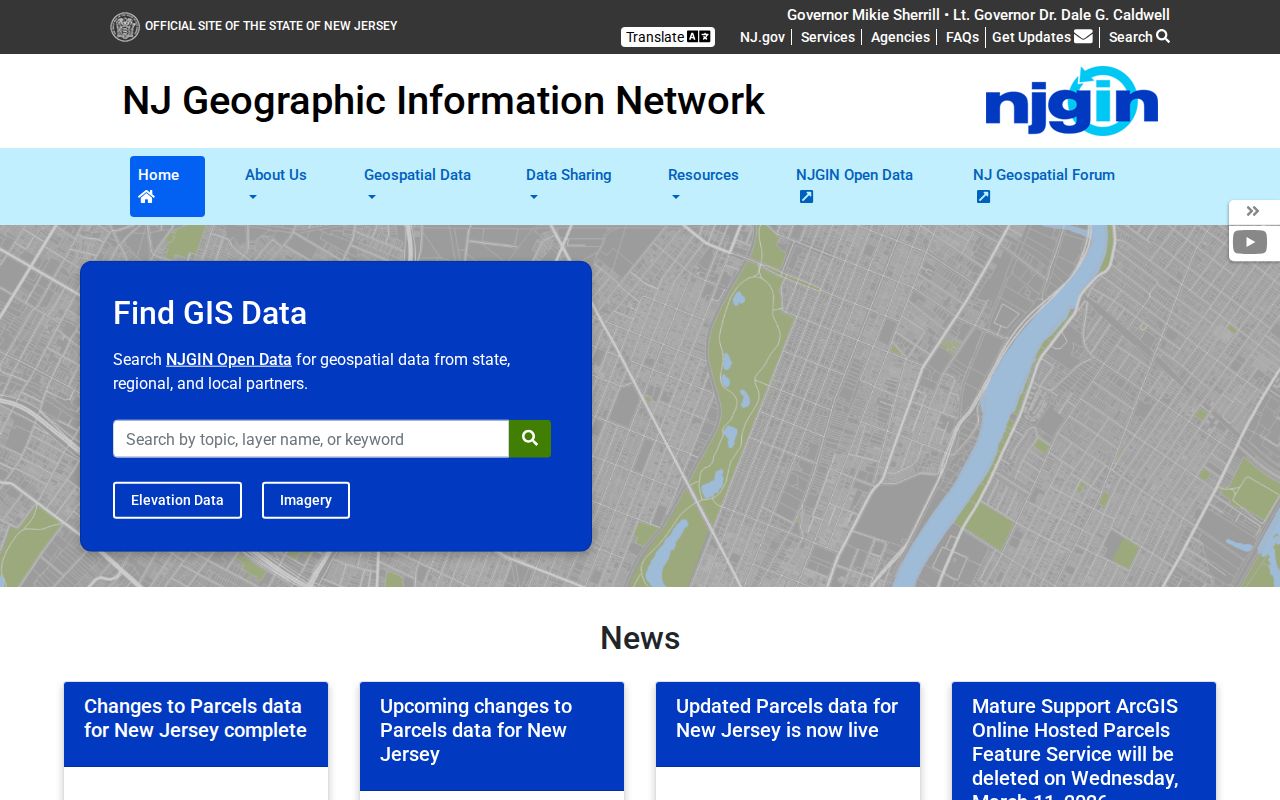
Save the municipality, block, lot, PAMS PIN, property location, street address, property class, map update date, and whether an owner name is shown or redacted. Move from that stable parcel identity to the Register or the municipal assessor, rather than treating a mapped name as the end of the search.
Essex County Residents Records Offices
The major Essex offices have distinct roles. The Register handles deeds, mortgages, liens, releases, maps, and related instruments. The County Clerk handles election, registration, records, and county administrative services, but directs land matters to the Register and is not the OPRA custodian. Assessors and collectors hold annual assessment context. Courts, Health, Archives, and municipal clerks maintain separate systems.
Essex County Register of Deeds and Mortgages
Land transactions for Essex municipalities, including the PRESS index and Record Room.
973-621-4960
PRESS public records search
Municipal Assessor and Tax Collector
Annual assessment, property class, parcel address, and public owner or mailing fields where available.
Essex Election Offices
Registration administration, official status route, and statutory voter-list access.
Commissioner of Registration: 973-621-5061
New Jersey State Archives
Historical vital series, naturalizations, probate, chancery, and county materials.
The appropriate office depends on the record, not on the person being searched. For address-by-address work, the Essex County street directory follows the parcel and document sequence in more detail.
Essex County Deed Index Fields
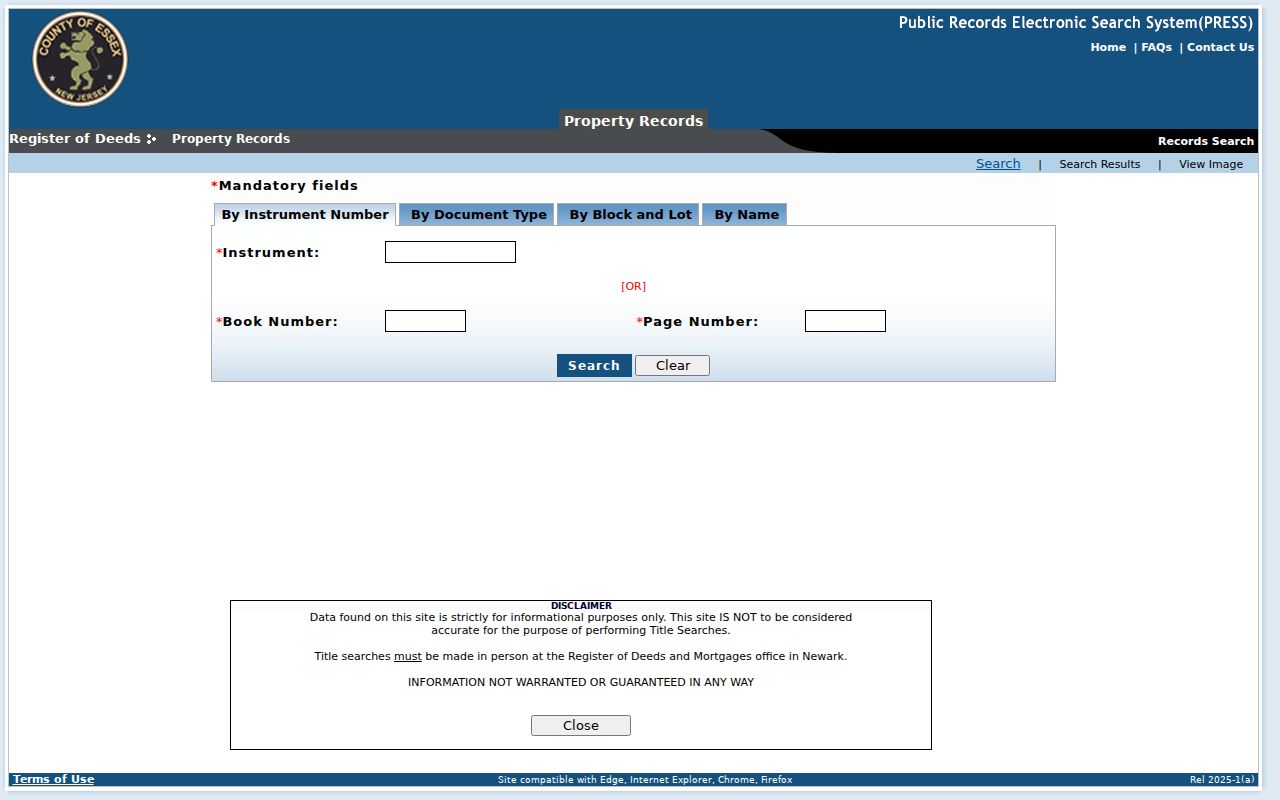
PRESS is the Essex Register's Public Records Electronic Search System. It offers instrument-number or book-and-page searches, document-type searches, block-and-lot searches, and name searches. For name mode, the last name or company name is required and first name is optional. Block-and-lot mode requires municipality, block, and lot. The index is useful for identifying a recorded role and a date, but the Register says online information is not a title search.
The PRESS basic-search screen is the source for these field choices. Its remote coverage is described from October 1, 1996, while older material is handled through the Public Vault or Record Room. A multi-year search needs separate date windows because the interface limits a range to 90 days.
| Field | Type | When Used | Format Note |
|---|---|---|---|
| Instrument | Text | Instrument mode | Use instead of book and page when the number is known. |
| Book and Page | Paired text | Book/page mode | Both fields are required together. |
| Municipality | Dropdown | Required for block and lot | Includes Essex municipalities, Essex County, and County Wide. |
| Block and Lot | Paired text | Block/lot mode | Use the municipality's local format and preserve both values. |
| Last or Company Name | Text | Name mode | Required; test initials, punctuation, and known variants. |
| From and To | Date pair | Name or document-type work | Use mm/dd/yyyy and no more than a 90-day window. |
Log the search date, municipality, result count, document type, instrument number, book and page where shown, party role, and image status. A recorded deed or mortgage can supply a lead, but read the instrument or obtain an official copy before describing title.
Current Essex County Residents Sources
Current directory-like records do not all list the same people or answer the same question. A parcel record can show a property association. A deed index can show an indexed party role. The voter route addresses registration administration within statutory limits. Courts list docketed matters, subject to confidentiality rules. These categories become more useful when the searcher knows which record is direct and which is only a lead.
| Source | What It Can Show | Keeper | Access Limit |
|---|---|---|---|
| Parcel and assessment record | Property location, assessment context, and public owner display where permitted | Municipal assessor, NJGIN, Property Explorer | Annual data can lag; mailing address and owner field do not prove occupancy |
| PRESS deed index | Recorded party roles, document type, and recording date | Essex County Register | Index is not a title search; image access varies |
| Voter status and lawful lists | Election-administration route and bounded public access | NJ elections and Essex election offices | Protected addresses and signatures are excluded |
| Court docket | Case party, court, filing, and disposition | NJ Courts, municipal courts, PACER | Sealed, expunged, juvenile, family, and confidential matters may not appear |
| Historical directory or census | Presence at an address in a dated source | NPL, NJ Historical Society, NARA, State Archives | Snapshot evidence; spelling and boundary differences matter |
For a single person, compare two independent facts before connecting records. The Essex County resident lookup gives the name-centered verification sequence.
Essex County Residents and Voter Records
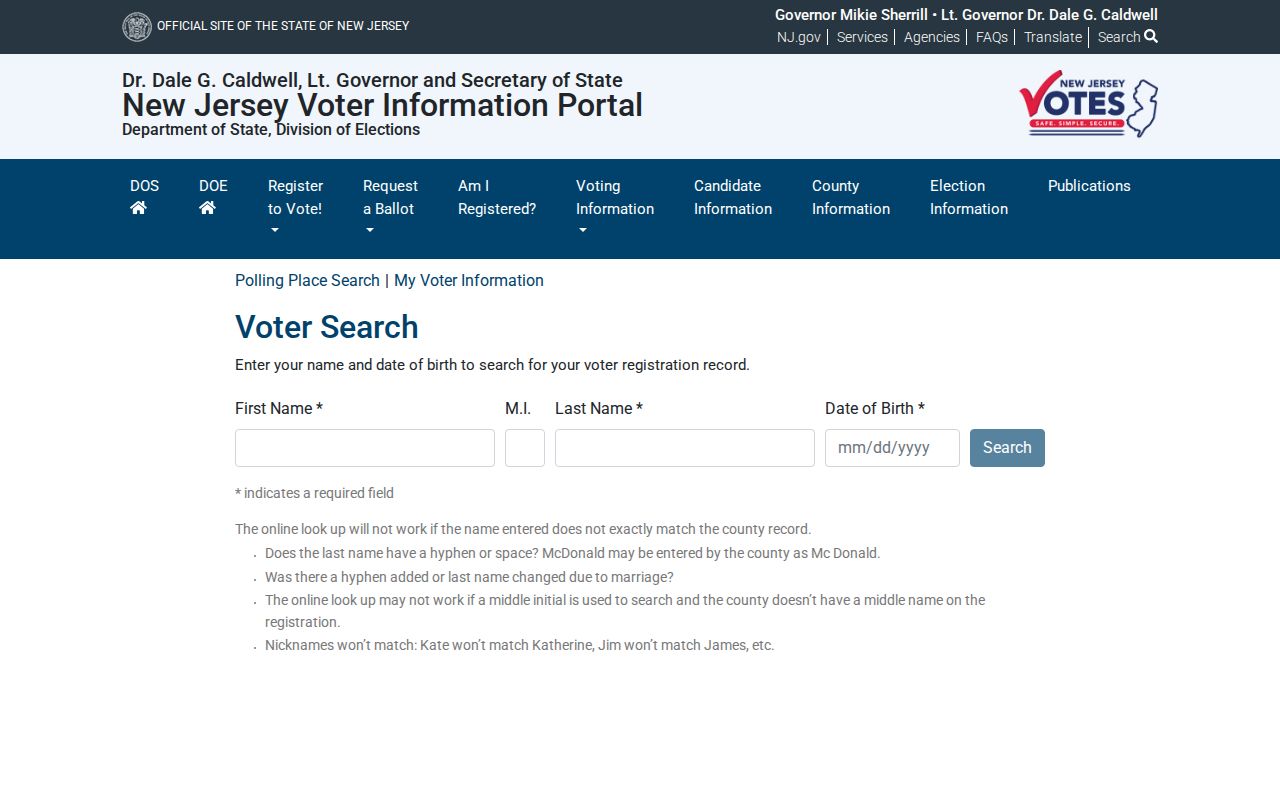
New Jersey's official voter-registration page points to the “Am I Registered?” status check. Registration is generally due at least 21 days before an election. A record can become inactive after a sample ballot is returned as undeliverable or an address question remains unresolved. An absent result is therefore not proof that someone never lived at an address, and the live result fields should not be claimed without checking the live screen.
The New Jersey voter-registration guidance explains the official route and the status rules. Exact matching matters: county spelling, hyphens, spaces, changed surnames, middle initials, and nicknames can affect a search.
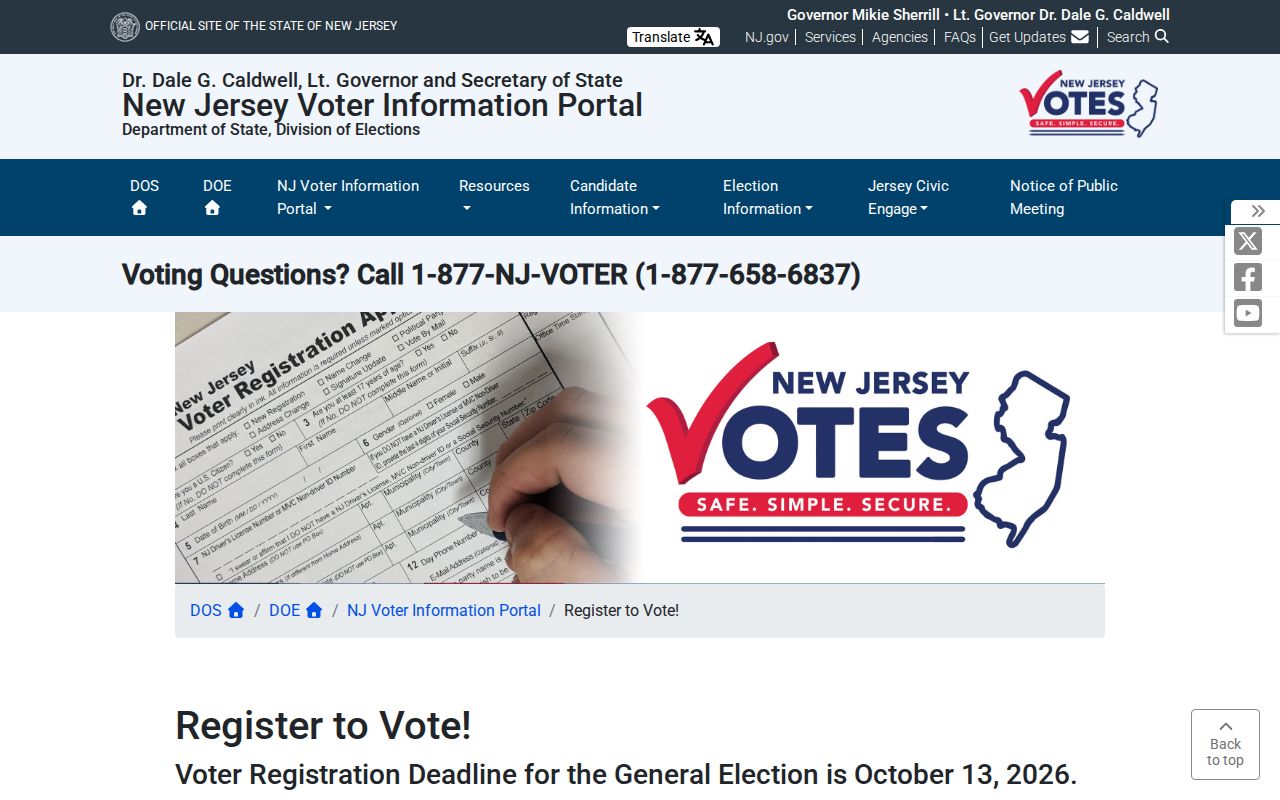
The voter status portal is the live status route. Its automated inspection was blocked, so the research preserves the official instructions without inventing an exact result layout.
N.J.S.A. 19:31-18.1 governs voter-list access, excludes signatures and covered-person home addresses, and limits particular solicitation uses. Public output is not the full statewide registration system.
Essex County Residents in Court Indexes
New Jersey Courts separates case families. Civil and foreclosure systems can search by party name or docket; criminal searches can use name or county; criminal judgments use defendant, SBI, complaint, or indictment; judgment liens use party, judgment, or docket; and Tax Court can use party, docket, or block and lot. Municipal cases use the statewide path with municipality-specific contact pages. Some functions require first-time registration, and confidential records do not appear.
The New Jersey Courts public-search landing page is the correct starting point for choosing a case family. Capture court, case number, party role, filing date, disposition, and sealed or restricted status. A court result is a docketed event, not proof of identity or outcome without the underlying docket and independent corroboration.
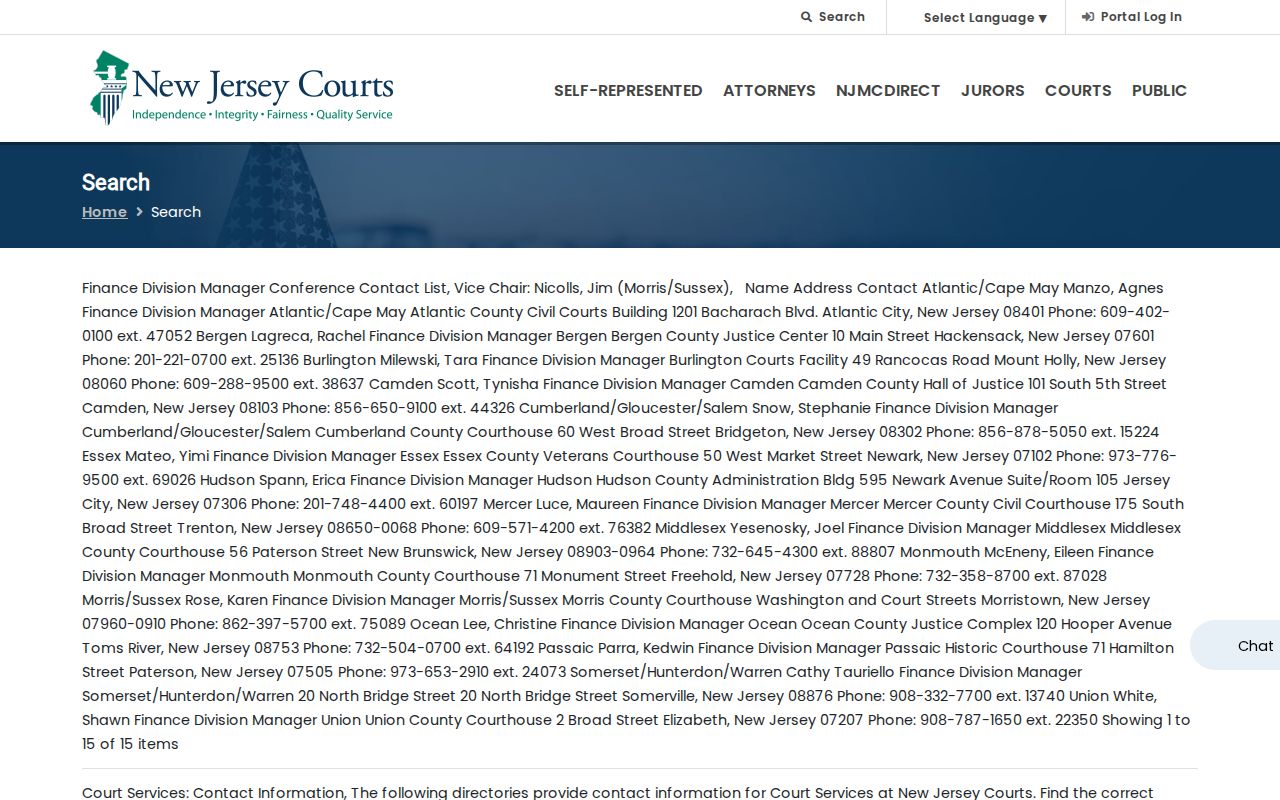
For a municipal matter, the documented fields are Court, Type, Year, and Number. Result fields can include complaint number, defendant name, DCJ ID, status, sealed indicator, and actions. They help document a search method, not create a complete history.
Essex County Directory Source Levels
Official systems provide a custodian, a stated scope, and a way to verify a result. Commercial compiled reports are a separate category. They can mix property, court, voter, vital, driving, and license material from different dates and people. They are not a substitute for the office that holds the record, and the strongest next step is to check the underlying source rather than repeat the report's conclusion.
| Official record trail | Names the custodian, record type, date, query, access restriction, and available correction route. |
|---|---|
| Commercial compiled category | May combine records with different dates, scopes, or same-name matches; use it only as a prompt to verify elsewhere. |
| Important conclusion | Needs the original index, image, or certified record from the responsible custodian. |
Keep a simple research log: source date, system, query values, result identifier, record type, date in record, identity or location clues, access status, privacy note, and next step. The label “not found in this index” is more accurate than claiming that a person, event, or address did not exist.
Historical Essex County Residents Sources
Newark Public Library's New Jersey Room is the main local-history gateway for Newark, Essex County, and New Jersey. Its directory collection identifies Newark city and criss-cross volumes from about 1835–1964, later Newark and Suburban or Essex criss-cross material from about 1972 into the current collection, and Newark telephone books through 2019. Statewide city directories, telephone books, yearbooks, newspapers, maps, photographs, and archival collections add different kinds of dated evidence.
Directories may be alphabetical and street order. An entry can connect a name to an address, occupation or business description, other-person notation, and street context, but the book's abbreviation key controls interpretation. A directory resident is not automatically the owner, and a printed entry is historical evidence for its year, not current residence.
- Index
- A finding tool that points to a record. It may need an image, book, or custodian review before it supports a conclusion.
- Parcel
- A mapped land unit, usually linked to block, lot, and PAMS PIN fields. It is not a household roster or legal survey boundary.
- Criss-cross directory
- A directory arranged by street and number, useful for an address search when the relevant year and arrangement are confirmed.
- Situs address
- The physical parcel location. It can differ from a tax mailing address and neither one by itself proves occupancy.
Note: Preserve the directory year, page or image, and its alphabetical or street-order arrangement with every historical result.
Newark's Directory Story in Numbers
Newark's digitized directory collection covers 1835–1964, is organized by year, and reports 104 objects, 217,243 files, and about 901.9 GB. It was scanned from physical and microfilm copies. Those figures show a substantial historical shelf, but they do not make the run complete for every question. Poor scans, missing pages, and series changes are reasons to check physical or microfilm copies in the New Jersey Room.
The New Jersey Historical Society adds another focused shelf for the 1930s: Newark directories for 1930, 1931, 1932, 1934, 1935, 1936, and 1939; Sanborn maps for 1930 and 1931; cemetery and church material; selected industrial directories; newspapers; and 1930 census figures. Pairing a volume with a map or a census image can give a street its period context without claiming a continuous residency record.
That combination is the practical story of Essex research: a street can appear first in a directory, then a map, newspaper, probate file, or later deed index. Each source adds a date and a role, while gaps stay visible.
Essex County Residents Vital History
New Jersey vital records have firm access boundaries. The Department of Health identifies statewide births beginning in 1925, marriages and deaths beginning in 1951, domestic partnerships in 2004, civil unions in 2007, and stillbirths in 1969. The State Archives maintains births through 1924 and marriages and deaths through 1950. Current and recent records are protected and are not a free public name-search database.
The New Jersey Vital Records page is the statewide starting point. Certified copies require the application, acceptable identification, fee, and relationship or other eligibility proof. Online, mail, walk-in, and local processing have different instructions, and the current ordering page should be checked before filing.
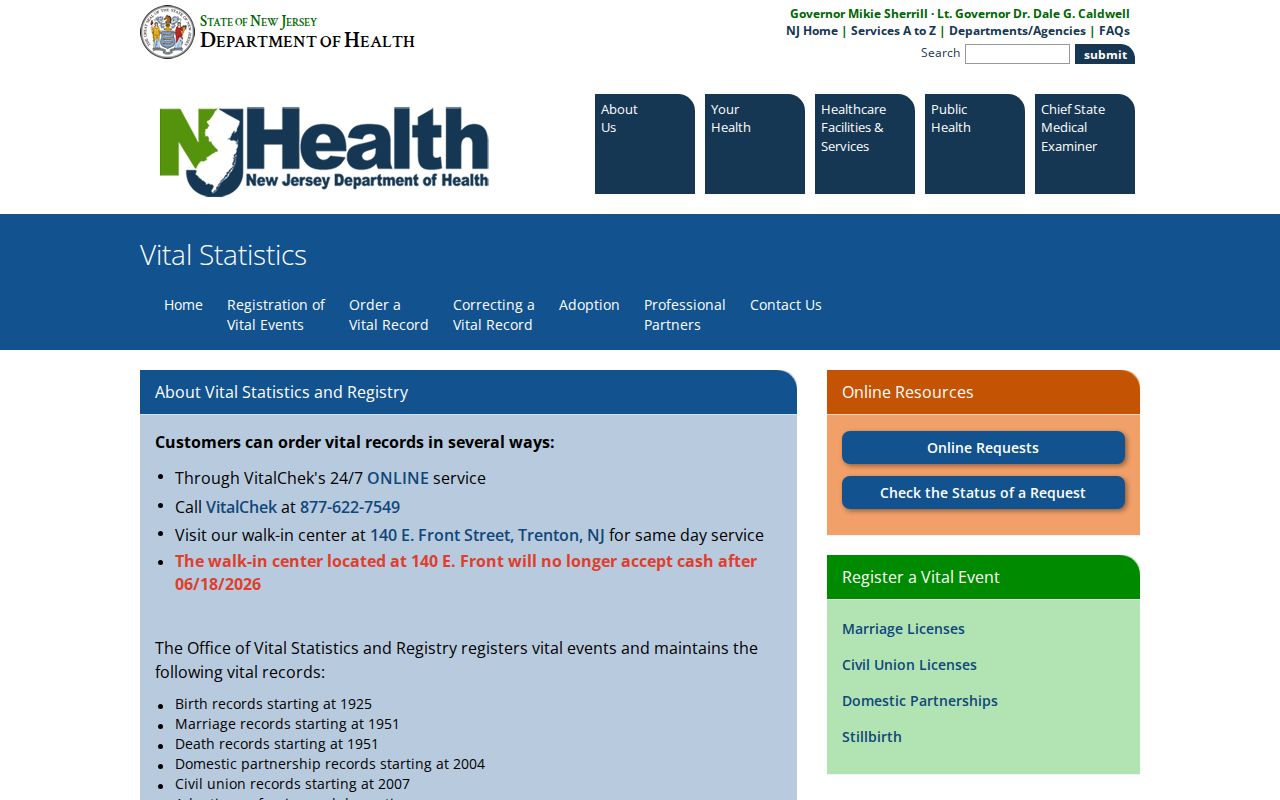
Genealogical access uses different thresholds: births more than 80 years old, marriages more than 50 years old, and deaths more than 40 years old, subject to the stated rules. An early negative result belongs in the notes as “not found in this index,” especially where filing was incomplete.
Essex County Business Record Clues
New Jersey's Division of Revenue and Enterprise Services provides business-entity and name routes. Searches can use an original filing date range, business name, principal name, registered agent, associated name, keyword, or entity ID. The records-request guidance also covers status reports, charters and amendments, UCC debtor or secured-party history, and trade or service marks.
The New Jersey business and UCC request guidance describes those record types and their request path. A principal, registered agent, licensee, or UCC party is a dated official role. It is not automatically a current Essex County resident or a household address.
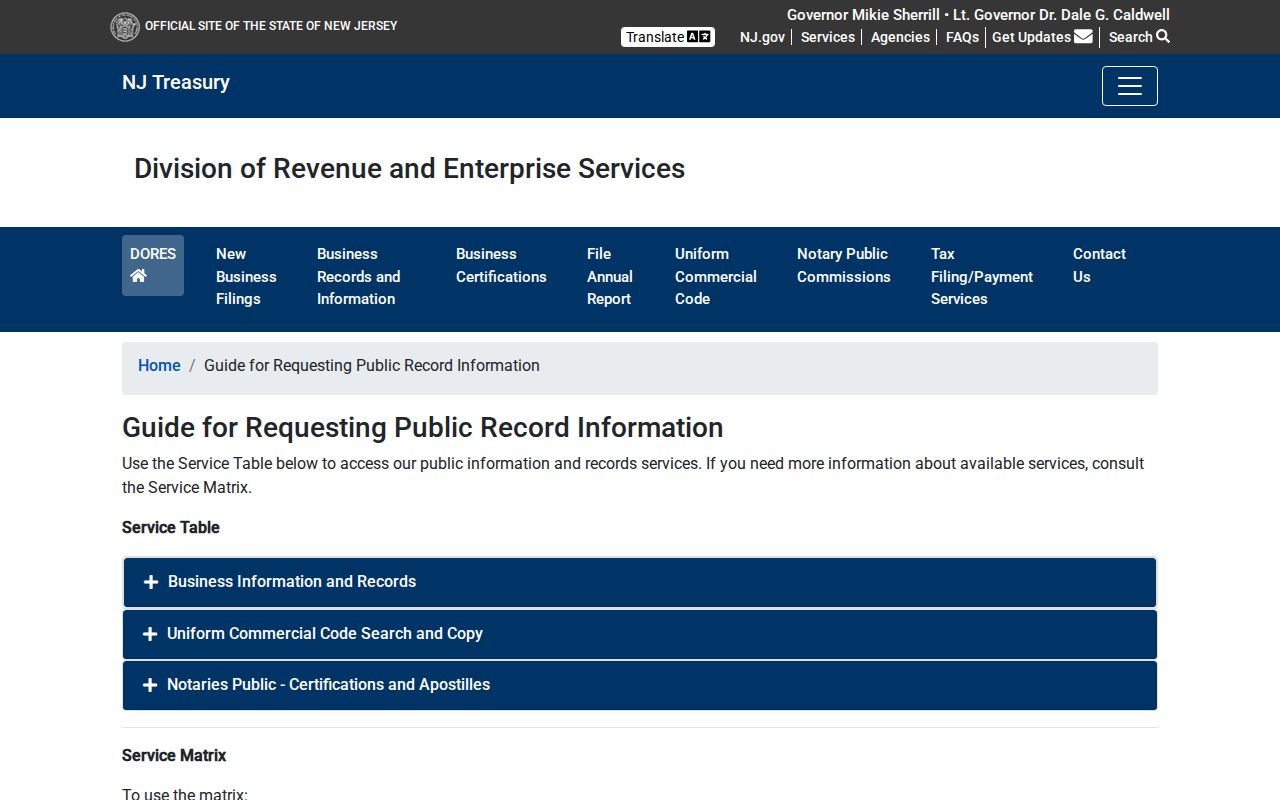
When a business record is relevant, preserve the entity or license number, filing or issue date, status, public business address, and role. Then seek an independent record before connecting it to a person.
State Status Searches Need Context
Some official state systems are status-specific, not resident directories. The New Jersey Department of Corrections links to its Incarcerated Person Search Engine, and the State Parole Board directs users to state information routes. The live fields were not exposed during the official research inspection, so no field list should be invented. A name match is only a lead and needs exact identifiers and date context.
The NJDOC information page is the official entry route for that state system. It should not be used to state that a person currently lives in Essex County or to infer facts beyond an authenticated result.
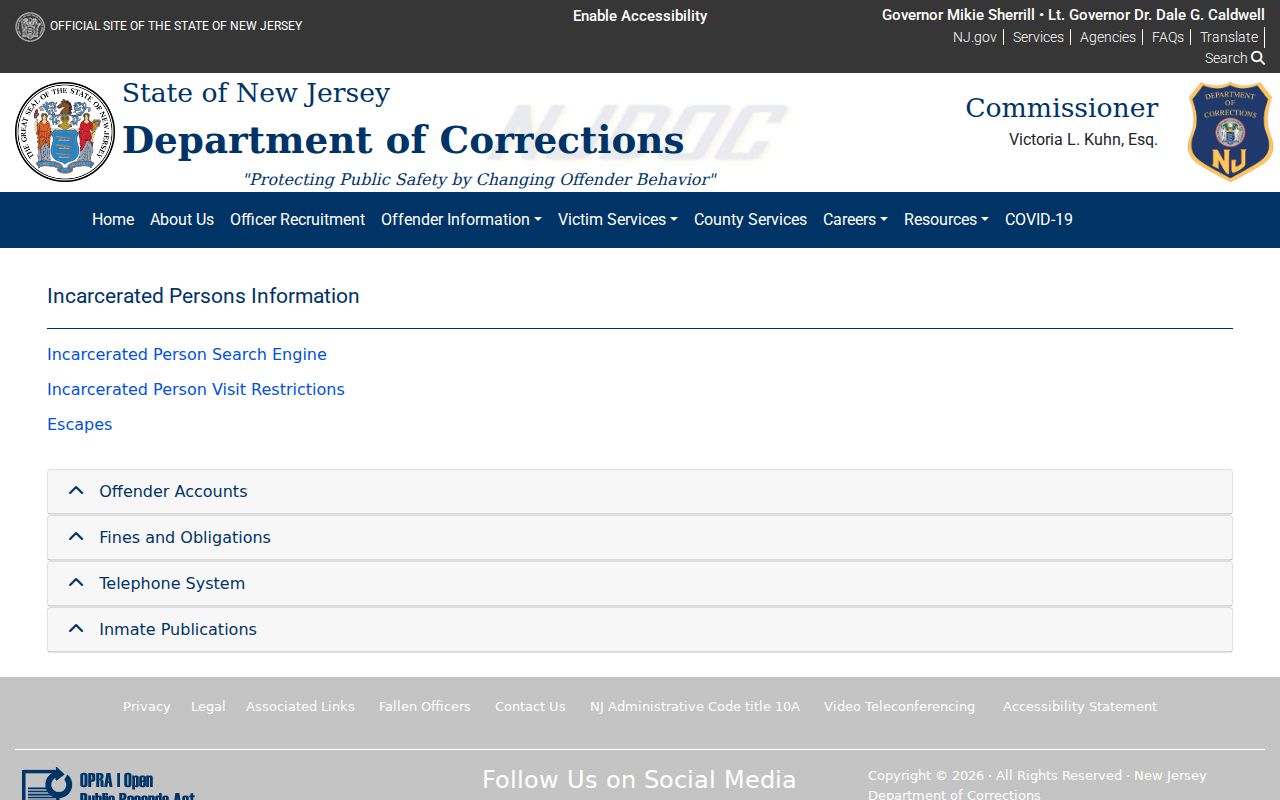
A precise record log is safer than a broad name search: preserve the official system, query date, result identifier, and access or privacy limitation, then avoid repeating sensitive information.
Essex County Residents Privacy Limits
Missing or redacted data is not a problem to solve by inference. The Address Confidentiality Program can provide qualifying participants with a substitute address for state and local agencies. Daniel's Law protects defined officials and household members. Voter-list rules exclude signatures and covered-person addresses. Sealed, expunged, juvenile, family, and other confidential court matters may be unavailable, while vital records have their own eligibility gates.
OPRA, the New Jersey Open Public Records Act, allows requests for identifiable existing records from the correct custodian. It does not require an office to create a person dossier, search every system, perform a title search, or resolve a historical relationship. Essex County provides an online OPRA portal and a paper form, but the County Clerk is not the OPRA custodian for all records. Direct a request to the office that keeps the record and use a narrow date range and exact record label.
Lawful personal use. Use records for personal, lawful research and verify important results with the custodian. New Jersey's stalking law, N.J.S.A. 2C:12-10, prohibits using records to monitor, threaten, or repeatedly contact another person.
For a correction or safety concern, contact the relevant custodian and preserve the source, date, and record identifier. Do not reverse-engineer protected fields or confront a person at an address.