
Search Essex County Residents
Pick the narrowest source first. A property question begins with the municipality, a street address, or a parcel identifier. Historical work leans on directories, census images, newspapers, probate files, and archival collections. Court research is different. It needs the right case family and a docket. One name can belong to several people. So keep the municipality, address, date range, middle initial, document role, or parcel PIN beside every result.
Essex County systems also use different identifiers. A ZIP describes delivery geography, while a municipality is a civil jurisdiction. A block and lot serve land records and taxation, a PAMS PIN identifies a parcel, and a ward or election district draws an election boundary. None proves current occupancy on its own.
- Preserve the supplied name or address exactly, then note spelling variants, municipality, and a reasonable date range.
- For a location, use NJGIN or the municipal assessor to resolve the street, block, lot, and PAMS PIN.
- Use the Essex Register's PRESS index for recorded-document roles and dates, then inspect the instrument when a conclusion depends on it.
- For a historical trail, compare an annual directory with census, newspaper, map, probate, or Archives material.
- When no online index exists, request an existing, identified record from the custodian rather than asking for a custom person report.
Note: Log the source, the query values, and the access date whenever you combine results from different record systems.
Essex County Has 22 Record Doors
Essex County opens through 22 separate municipal doors. Their records sit in no single countywide people database. The Register preserves land transactions for the whole county. Superior Court operates through the Essex Vicinage, while each municipal court stays tied to its own town. Assessments are local too. The Tax Board coordinates them and routes questions to municipal assessors. For a recent vital event, the municipality where it occurred can matter as much as the county name.
This is why you should stabilize the address early. A civil municipality, USPS city, ZIP, block and lot, mapped parcel, ward, and historic enumeration district can describe overlapping yet different geography. Keep each value in its own field. A long street can cross a municipal line, and an old household may sit under a different ward or street form.
Numbers matter. The county's 22-municipality structure makes a broad name hit less useful than a name paired with a municipality, date, and second independent clue.
Find Parcels Before Names
Parcel research comes before name hunting. NJ Property Explorer and NJGIN tie a street to stable parcel fields. Property Explorer lists the address, block and lot, prior-year taxes, and classification. It also lists annual assessed land and improvement values. Owner names appear where permitted. Tax data can lag a later ownership change, so read the parcel card as tax-year context. It is not a current title or occupancy statement.
The NJGIN Property Explorer is the state mapping entry point. County and municipal governments maintain the source data. The state simply composites it. Parcel polygons are not legal boundaries, and Daniel's Law can suppress owner names. A blank owner field never means no ownership record exists underneath.
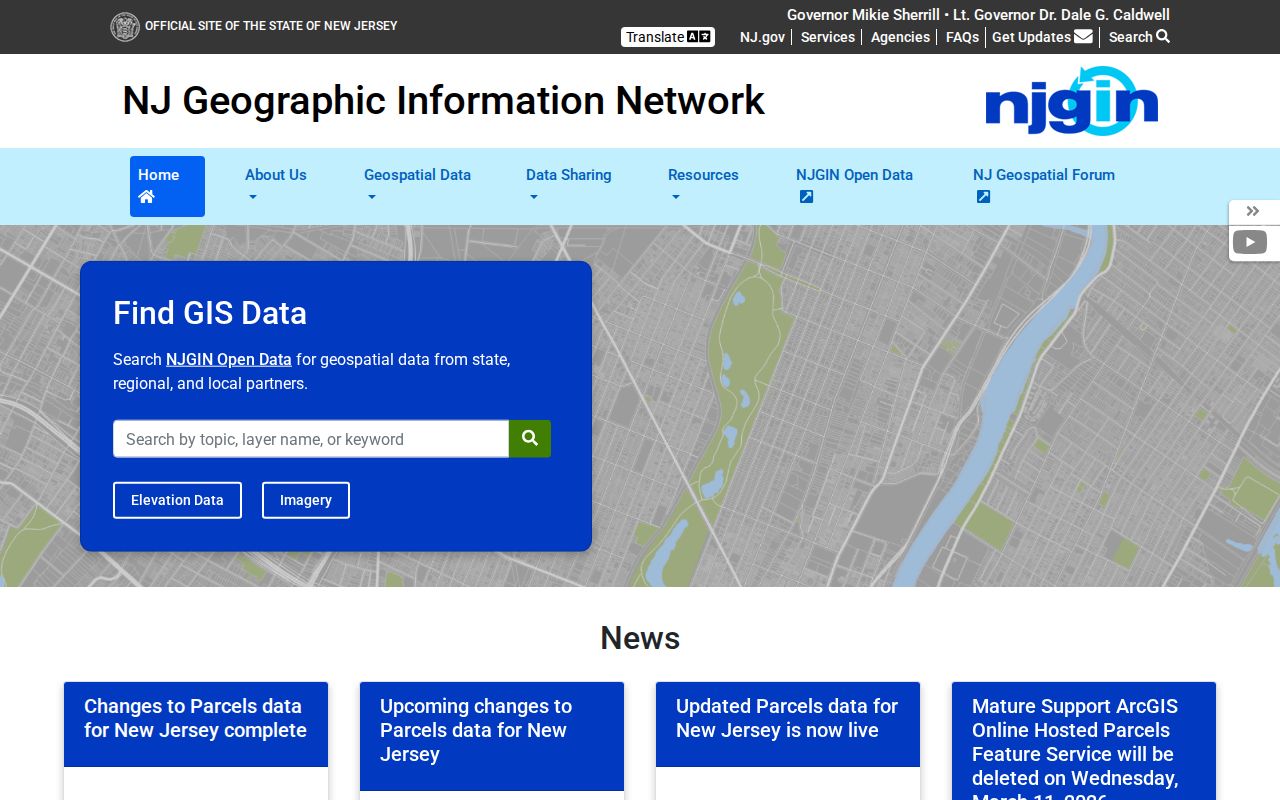
Record the stable identity first. Save the municipality, block, lot, and PAMS PIN. Note the property location, street address, property class, and map update date. Then log whether the owner name is shown or redacted, and carry that parcel identity to the Register or the municipal assessor instead of treating a mapped name as the end of the search.
Essex County Residents Records Offices
Each major Essex office plays a distinct role. The Register records deeds, mortgages, liens, releases, maps, and related instruments. The County Clerk handles elections, registration, records, and county administrative services, but it directs land matters to the Register. The Clerk is also not the OPRA custodian. Assessors and collectors hold the annual assessment context. Courts, Health, Archives, and municipal clerks each keep separate systems.
Essex County Register of Deeds and Mortgages
Land transactions for Essex municipalities, including the PRESS index and Record Room.
973-621-4960
PRESS public records search
Municipal Assessor and Tax Collector
Annual assessment, property class, parcel address, and public owner or mailing fields where available.
Essex Election Offices
Registration administration, official status route, and statutory voter-list access.
Commissioner of Registration: 973-621-5061
New Jersey State Archives
Historical vital series, naturalizations, probate, chancery, and county materials.
Match the office to the record, not to the person. For address-by-address work, the Essex County street directory walks the parcel and document sequence in fuller detail.
Essex County Deed Index Fields
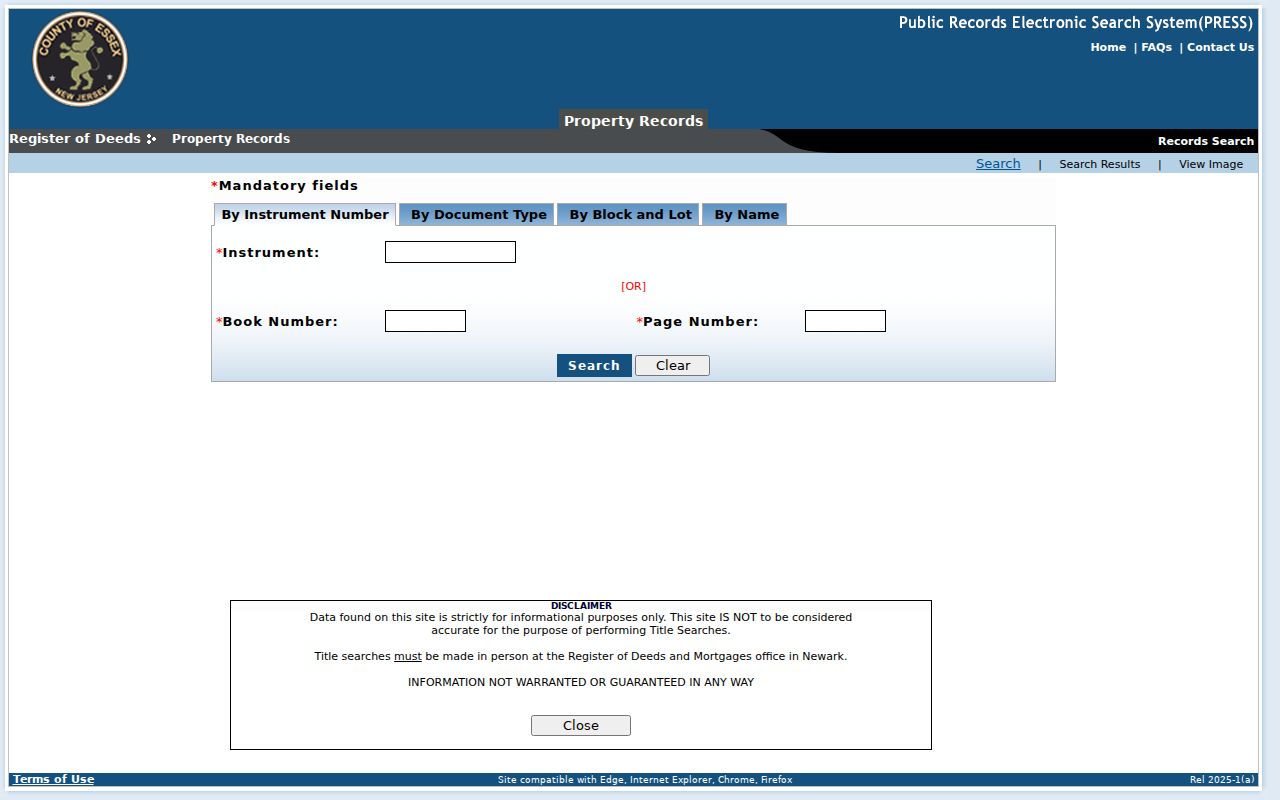
Essex County deeds live in PRESS, the Register of Deeds' Public Records Electronic Search System. The database supports four search modes. You can look up an instrument number or a book-and-page cite. You can pick a document type, search by block and lot, or run a party name. Name mode requires a last name or a company; a first name is optional. Block-and-lot mode asks for the municipality, the block, and the lot. Keep this in mind. The Register treats online results as an index only, not a title search.
The field choices come from the PRESS basic-search screen. Remote searching reaches back to October 1, 1996. Earlier recordings sit in the Public Vault or the Record Room. One quirk matters: a date range cannot span more than 90 days. A multi-year hunt means opening separate windows for each stretch.
| Field | Type | When Used | Format Note |
|---|---|---|---|
| Instrument | Text | Instrument mode | Use instead of book and page when the number is known. |
| Book and Page | Paired text | Book/page mode | Both fields are required together. |
| Municipality | Dropdown | Required for block and lot | Includes Essex municipalities, Essex County, and County Wide. |
| Block and Lot | Paired text | Block/lot mode | Use the municipality's local format and preserve both values. |
| Last or Company Name | Text | Name mode | Required; test initials, punctuation, and known variants. |
| From and To | Date pair | Name or document-type work | Use mm/dd/yyyy and no more than a 90-day window. |
Record what you find as you go. Note the search date, municipality, result count, document type, instrument number, book and page where shown, the party's role, and the image status. A deed or mortgage entry is only a lead, so read the instrument itself or order an official copy before making any claim about title.
Current Essex County Residents Sources
Not every current record answers the same question. A parcel entry ties someone to land. A deed index shows a party role. Voter rolls handle registration administration within statutory limits. Courts list docketed matters only, and confidentiality rules hide some of those. Knowing which record is direct evidence and which is merely a lead makes any Essex County residents directory search far more productive.
| Source | What It Can Show | Keeper | Access Limit |
|---|---|---|---|
| Parcel and assessment record | Property location, assessment context, and public owner display where permitted | Municipal assessor, NJGIN, Property Explorer | Annual data can lag; mailing address and owner field do not prove occupancy |
| PRESS deed index | Recorded party roles, document type, and recording date | Essex County Register | Index is not a title search; image access varies |
| Voter status and lawful lists | Election-administration route and bounded public access | NJ elections and Essex election offices | Protected addresses and signatures are excluded |
| Court docket | Case party, court, filing, and disposition | NJ Courts, municipal courts, PACER | Sealed, expunged, juvenile, family, and confidential matters may not appear |
| Historical directory or census | Presence at an address in a dated source | NPL, NJ Historical Society, NARA, State Archives | Snapshot evidence; spelling and boundary differences matter |
Before linking records to one person, compare two independent facts. The Essex County resident lookup lays out the name-centered verification sequence step by step.
Essex County Residents and Voter Records
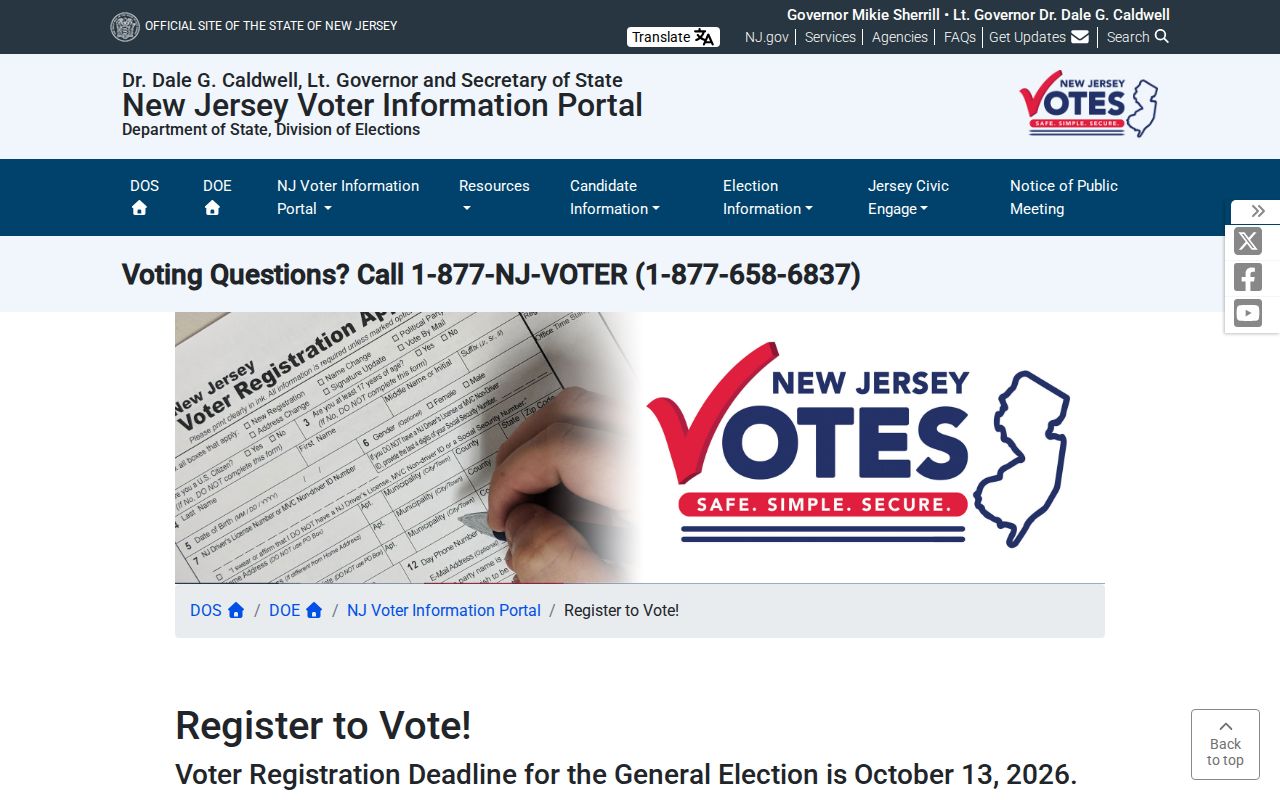
New Jersey's official registration page routes searchers to the "Am I Registered?" status check. Registration is generally due at least 21 days before an election. A record can slip to inactive status. That happens when a sample ballot comes back undeliverable, or an address question stays open. So an absent result never proves someone never lived at an address. Claiming the live result fields without viewing the live screen is a mistake, too.
The New Jersey voter-registration guidance explains the official route and the status rules. Exact matching matters. County spelling, hyphens, spaces, changed surnames, middle initials, and nicknames can all swing a search.
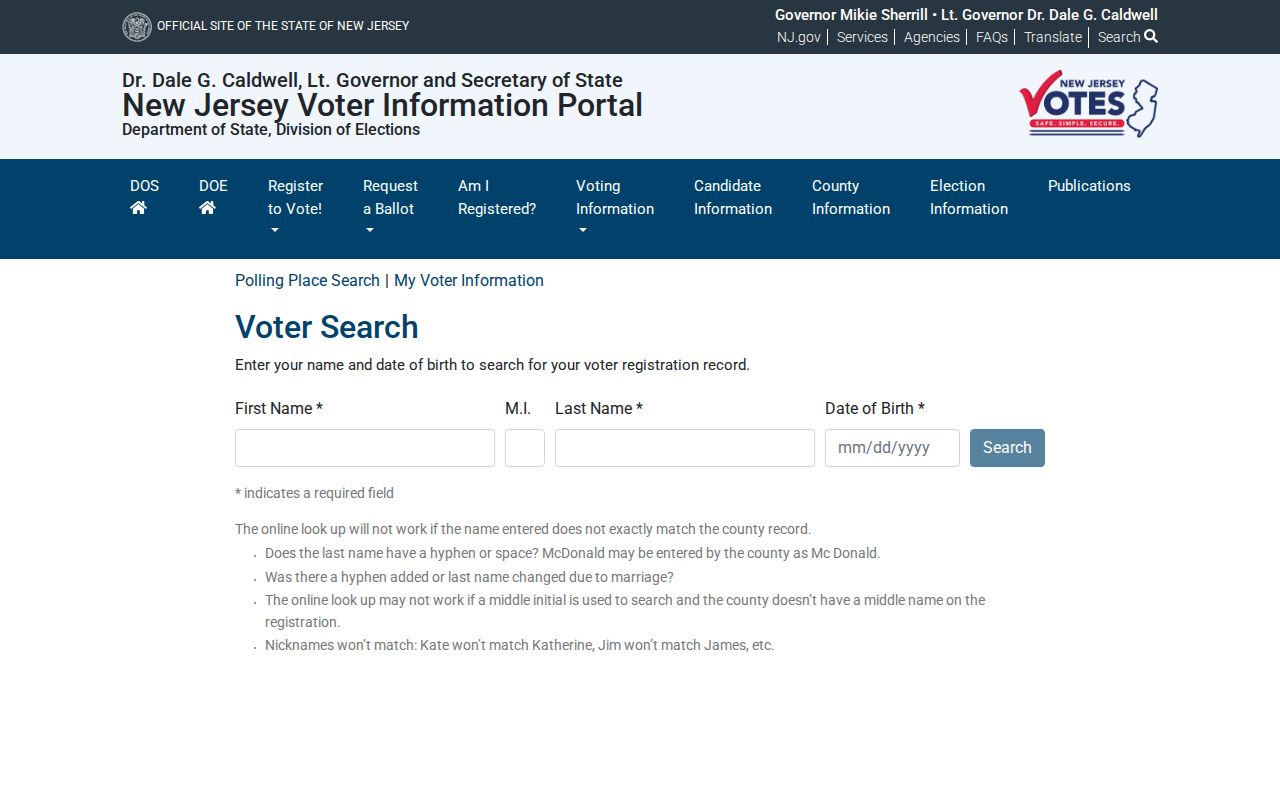
The voter status portal is the live status route. It publishes its own instructions, and result layouts can change, so rely on the official screen rather than any secondhand field list.
N.J.S.A. 19:31-18.1 governs voter-list access. It excludes signatures and covered-person home addresses and limits certain solicitation uses. Public output is not the full statewide registration system.
Essex County Residents in Court Indexes
New Jersey Courts splits its records into case families. Civil and foreclosure systems search by party name or docket. Criminal searches take a name or a county. Criminal judgments work by defendant, SBI number, complaint, or indictment. Judgment liens go by party, judgment, or docket. Tax Court searches use party, docket, or block and lot. Municipal cases follow the statewide path with municipality-specific contact pages. Some functions require first-time registration. Confidential records never appear.
Start at the New Jersey Courts public-search landing page to pick the right case family. Record the court, case number, party role, filing date, and disposition. Also record any sealed or restricted status. A court hit is a docketed event. It is not proof of identity or outcome without the underlying docket and independent corroboration.
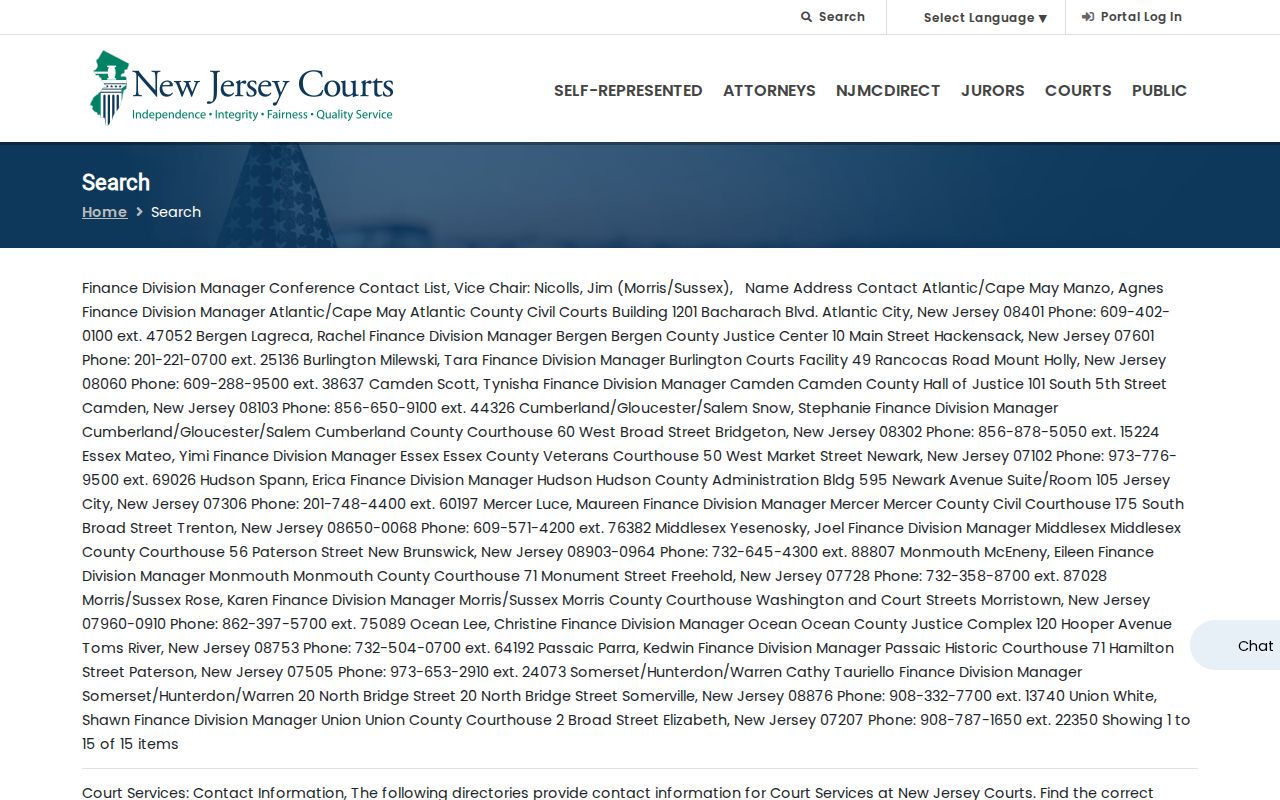
For a municipal matter, the documented search fields are Court, Type, Year, and Number. Results can carry a complaint number, defendant name, DCJ ID, status, sealed indicator, and actions. These fields document a search method. They do not build a complete history.
Essex County Directory Source Levels
An official system gives you a custodian. It also gives you a stated scope. And it gives you a way to verify a result. Commercial compiled reports are a different animal. They can blend property, court, voter, vital, driving, and license material. The blend may mix different dates and different people. No compiled report replaces the office that holds the record. The strongest next step is checking the underlying source yourself. Repeat the report's conclusion only after that check.
| Official record trail | Names the custodian, record type, date, query, access restriction, and available correction route. |
|---|---|
| Commercial compiled category | May combine records with different dates, scopes, or same-name matches; use it only as a prompt to verify elsewhere. |
| Important conclusion | Needs the original index, image, or certified record from the responsible custodian. |
Keep a simple research log: source date, system, query values, result identifier, record type, date in record, identity or location clues, access status, privacy note, and next step. "Not found in this index" is the accurate label. It beats claiming a person, event, or address never existed.
Historical Essex County Residents Sources
The Newark Public Library's New Jersey Room is the main local-history gateway for Newark. It also serves Essex County and New Jersey. Its directory collection holds Newark city and criss-cross volumes from about 1835–1964. Later Newark and Suburban or Essex criss-cross material runs from about 1972 into the current collection, and Newark telephone books extend through 2019. Statewide city directories, telephone books, yearbooks, newspapers, maps, photographs, and archival collections add other kinds of dated evidence.
Directories may be alphabetical or street order. An entry can tie a name to an address, occupation or business description, other-person notation, and street context. The book's abbreviation key controls interpretation. A directory resident is not automatically the owner. And a printed entry is historical evidence for its year only, never current residence.
- Index
- A finding tool that points to a record. It may need an image, book, or custodian review before it supports a conclusion.
- Parcel
- A mapped land unit, usually linked to block, lot, and PAMS PIN fields. It is not a household roster or legal survey boundary.
- Criss-cross directory
- A directory arranged by street and number, useful for an address search when the relevant year and arrangement are confirmed.
- Situs address
- The physical parcel location. It can differ from a tax mailing address and neither one by itself proves occupancy.
Note: Keep the directory year, page or image number, and the alphabetical or street-order layout attached to every historical residents directory result.
Newark's Directory Story in Numbers
The digitized Newark collection spans 1835 through 1964, filed volume by volume. Its scale is real. It holds 104 objects, 217,243 files, and roughly 901.9 GB, all scanned from paper and microfilm originals. Those numbers describe a deep historical shelf. They do not promise a complete run. Faint scans, missing pages, and changes in the series all argue for caution. Check physical or microfilm copies in the New Jersey Room.
The New Jersey Historical Society holds a second shelf aimed at the 1930s. Its Newark directories cover 1930, 1931, 1932, 1934, 1935, 1936, and 1939. Sanborn maps for 1930 and 1913-style coverage continues with 1931 maps. The shelf also holds cemetery and church material, selected industrial directories, newspapers, and 1930 census figures. A volume paired with a map or a census page can give one street its period context. Still, it does not pretend to prove continuous residency.
That is how Essex research usually works. A street surfaces in a city directory first. Then a map, a newspaper item, a probate file, or a later deed index adds another date. Each one adds another role too. The gaps stay honest and visible.
Essex County Residents Vital History
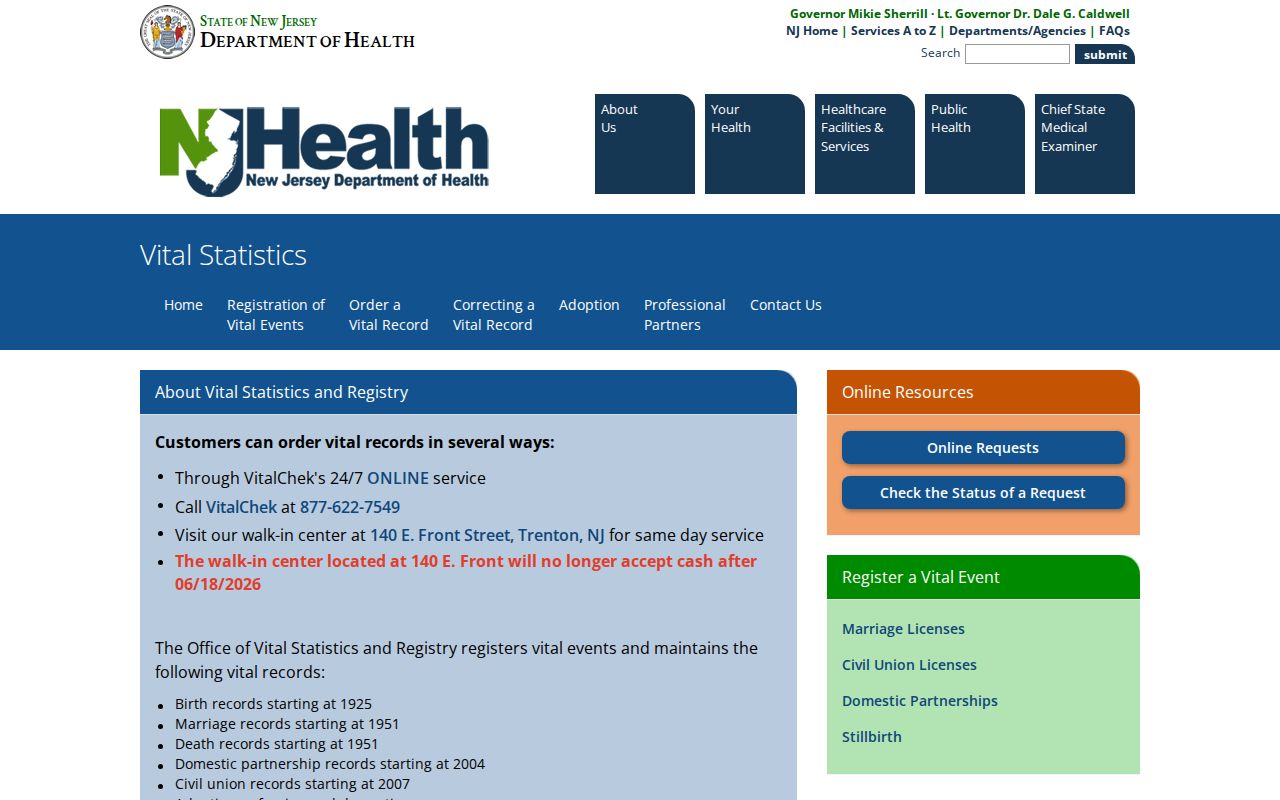
New Jersey vital records sit behind firm access rules. The Department of Health holds statewide births starting in 1925. Marriages and deaths start in 1951. Stillbirths date from 1969. Domestic partnerships began in 2004, and civil unions followed in 2007. Older material belongs to the State Archives. It keeps births through 1924 and marriages and deaths through 1950. Recent records stay protected. They are not a free public name-search database.
The New Jersey Vital Records page is the statewide starting point. A certified copy calls for the application. You also need acceptable identification, a fee, and proof of relationship or other eligibility. Online, mail, walk-in, and local processing each carry their own instructions. Check the current ordering page before filing.
Genealogy research gets friendlier thresholds. Births more than 80 years old, marriages more than 50, and deaths more than 40 open up under the stated rules. Filing was sometimes incomplete, though. Record a miss in your notes as "not found in this index" rather than assuming the event never happened.
Essex County Business Record Clues
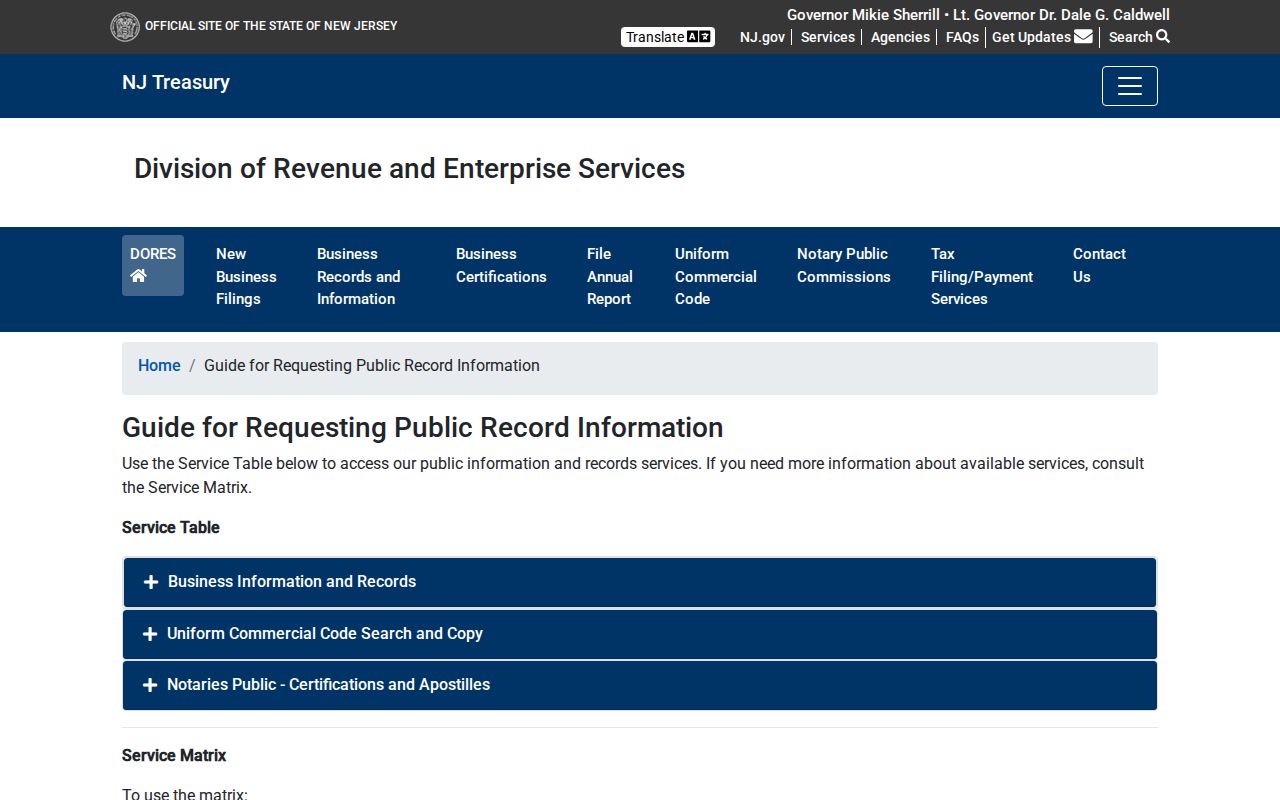
New Jersey's Division of Revenue and Enterprise Services runs the business-entity routes. Search options are broad. You can query by business name, principal, registered agent, associated name, keyword, entity ID, or an original filing date range. The records-request guidance also covers status reports, charters, amendments, UCC debtor and secured-party history, and trade or service marks.
The New Jersey business and UCC request guidance spells out each record type and its request path. A principal, agent, licensee, or UCC party is a dated official role. It is not automatically a resident. Nor is it a household address in Essex County.
Save the details that matter first. Keep the entity or license number, filing or issue date, status, public business address, and the person's role. Then find an independent record before tying the business to any individual.
State Status Searches Need Context
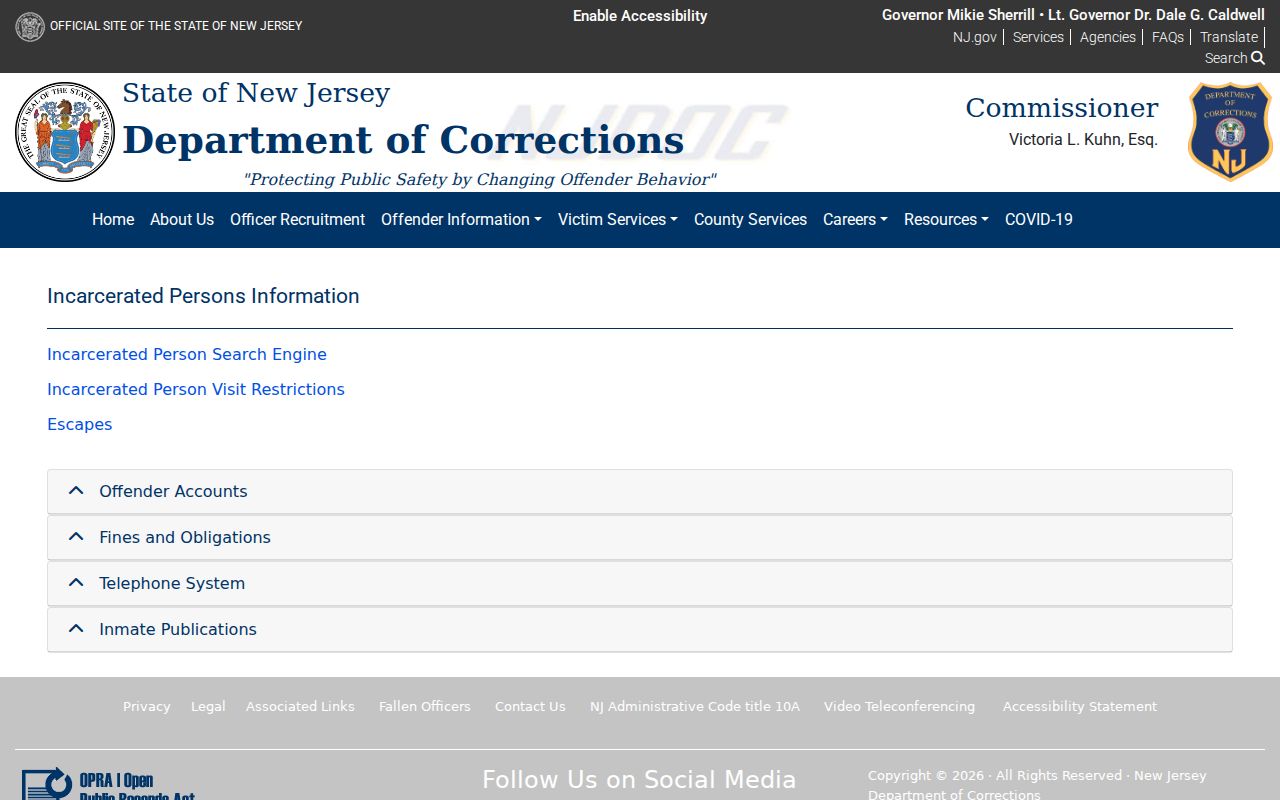
Some official state systems report status, not residency. The New Jersey Department of Corrections links to its Incarcerated Person Search Engine, and the State Parole Board points to its own state information routes. No field list is published for the live search. A name match is only a lead. It needs exact identifiers and date context.
The NJDOC information page is the official entry route for that state system. A result there never proves someone lives in Essex County. Treat it as status information and nothing more.
Skip the broad name search. Log the official system, query date, result identifier, and any access or privacy limit, and do not repeat sensitive details you retrieve.
Essex County Residents Privacy Limits
Missing or redacted data is not a puzzle to solve by guessing. State law builds the walls. The Address Confidentiality Program gives qualifying participants a substitute address for state and local agencies. Daniel's Law shields officials and household members. Voter lists omit signatures and covered-person addresses. Sealed, expunged, juvenile, and family court matters may simply be unavailable. Vital records carry their own eligibility gates.
OPRA, the Open Public Records Act, covers requests for identifiable existing records. Those requests must go to the right custodian. It does not force an office to build a person dossier. It does not require a search of every system. It will not run a title search or settle a historical relationship. Essex County offers an online OPRA portal and a paper form. The County Clerk is not custodian for everything, though. Send each request to the office that keeps the record. Use a narrow date range and an exact record label.
Lawful personal use. Use records for personal, lawful research and verify important results with the custodian. New Jersey's stalking law, N.J.S.A. 2C:12-10, prohibits using records to monitor, threaten, or repeatedly contact another person.
Contact the right custodian. Preserve the source, date, and record identifier, and never reverse-engineer protected fields or confront a person at an address.