
Essex County Resident Lookup Coverage
No countywide one-click profile exists for an Essex County resident. The reliable method joins narrow records using two or more independent details, like a middle initial, a municipality, a street, a parcel PIN, a date range, or a document role. Begin with a stable record that speaks to the question itself. Expand only when the answer stays unclear. Remember the limits: a parcel association is not proof of occupancy, and a historical street directory listing is not proof that someone lives there today.
| Record | What It Confirms | Where | Access |
|---|---|---|---|
| Assessor or parcel record | A person or entity association with a parcel and the mapped property location | Municipal assessor, NJGIN, or Property Explorer | Owner fields may be redacted; annual data and mailing address do not prove occupancy |
| Essex deed index | An indexed grantor, grantee, or other party role | Essex Register PRESS and Record Room | Search the date and block/lot; the index is not a title search |
| Voter status or list | A matching election-administration status or lawful list-access route | New Jersey voter portal and Essex election offices | Public output is narrower than the internal system; protected addresses and signatures are excluded |
| Court docket | A matching party connected to a case and the recorded disposition | New Jersey Courts, municipal courts, or PACER | Same-name matches and restricted matters require care |
| Vital or historical record | Whether an eligible or genealogical event record is available | NJ Department of Health, registrar, State Archives, NPL, or NARA | Current copies have eligibility and identification rules; old indexes remain incomplete |
A business filing or professional credential is a dated official role. It is not automatically a household address. Keep the record role, the record date, and any public business address separate from conclusions about where a person actually lives in Essex County.
Two Clues for Essex Residents
Build a minimum identity set before widening any name search. Do that in the Essex County residents directory. The set needs the full name and alternate spellings. Add a middle initial, an approximate date range, a municipality, a known address, and one more corroborating fact.
Strong second clues help too. These include a parcel PIN, a document role, a prior address, or a household detail the source itself publishes. A matching first and last name alone is never enough to join two records.
Exact matching carries real weight in New Jersey election guidance. Hyphens, spaces, changed surnames, middle initials, and nicknames can each shift a result. Essex County has 22 municipalities. That makes the same-name problem worse, especially across Newark, East Orange, Irvington, Bloomfield, and Montclair. Label every outcome as a direct record, an indexed lead, a historical inference, or an unresolved same-name match.
Identity check. Preserve the source date and exact query values with each result. A name match becomes useful only when independent records support the same person.
Essex County Resident Lookup in Courts
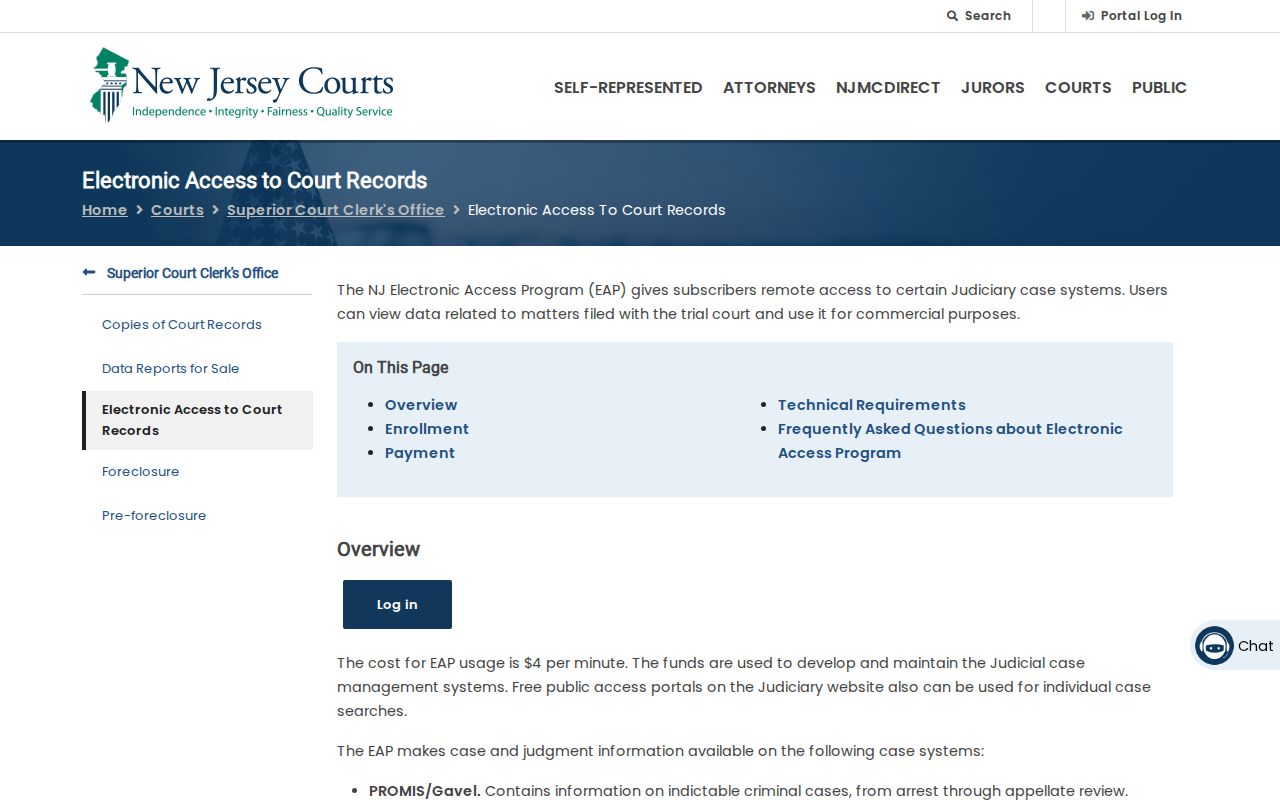
New Jersey Courts splits its public search systems by matter type. These cover civil, foreclosure, criminal, judgment lien, tax, and municipal. Civil and foreclosure searches accept a party name or docket number. Criminal searches work by name or county. Tax Court adds block and lot to its options. Some functions require registration, and confidential records never appear.
The New Jersey Courts electronic-access guidance separates free individual searches from subscriber access. Subscriber access is billed by the minute. Pick the court family first, then note the exact system and query mode you used. Newark Municipal Court is one local example. It does not replace the municipal court route for every Essex municipality.
Municipal matters follow the eCDR manual, which requires Court, Type, Year, and Number as search fields. Result and worklist fields can include the date created, court, complaint number, defendant name, DCJ ID, officer or complainant, status, sealed status, and available actions.
| Court and case number | Identifies the court system and the specific docketed matter. |
|---|---|
| Party role | Shows how a name is indexed in the proceeding; it is not an identity conclusion. |
| Filing date and disposition | Separates the start of a case from its recorded outcome. |
| Sealed or restricted indicator | Signals that public visibility or reporting is limited. |
| Query mode | Records whether the search used party, docket, county, defendant, judgment, or block/lot. |
Verify an Essex County Resident
Verification is a sequence. Anchor the person to a dated location or a document role first. Then compare a second independent record. With a property clue, keep the situs address apart from the owner's mailing address. Preserve the assessment year. With a court clue, read the docket and disposition before concluding anything. For historical work in Essex County, compare a directory or census image against its year and page.
- Write down the name as supplied, its likely variants, the municipality, and a bounded date range.
- Use a parcel, assessor, or deed-index clue to stabilize an address, block and lot, or role, while noting that any owner display may be redacted.
- Search the appropriate court family only if it answers the question, then capture court, case number, party role, filing date, disposition, and access status.
- Check a dated historical source, voter-status route, or eligible vital-record channel for a second clue rather than expanding into unrelated systems.
- Record what is direct, what is an index lead, what is an inference, and what remains unresolved.
- Docket
- The court's numbered case record, containing the sequence of filings and actions rather than a summary of a person's life.
- Index versus image
- An index points to a record. An image is the scanned or viewed record itself. An index match may need image or custodian review.
- Certified copy
- An official copy issued by the record custodian for requesters who meet the record's eligibility rules.
Note: A parcel map is not a legal survey, and a court-party match alone is not proof of identity without a second record.
Vital Records for Essex Lookup
New Jersey vital records are protected. They are not a free name-search database for the Essex County residents directory. Statewide series begin with births in 1925. Marriages and deaths start in 1951, stillbirths in 1969, domestic partnerships in 2004, and civil unions in 2007. The State Archives holds births through 1924 and marriages and deaths through 1950. For a recent event, find the municipality of occurrence. Then follow the state guidance on eligibility and applications.
The NJ Department of Health non-genealogical record route explains who may obtain a certified copy. Eligible parties include listed family relationships, government agencies, and court orders. Each request needs the right application, identification, fee, and proof of relationship or other eligibility. Online requests may take four to six weeks. Local and mail processing times can differ.
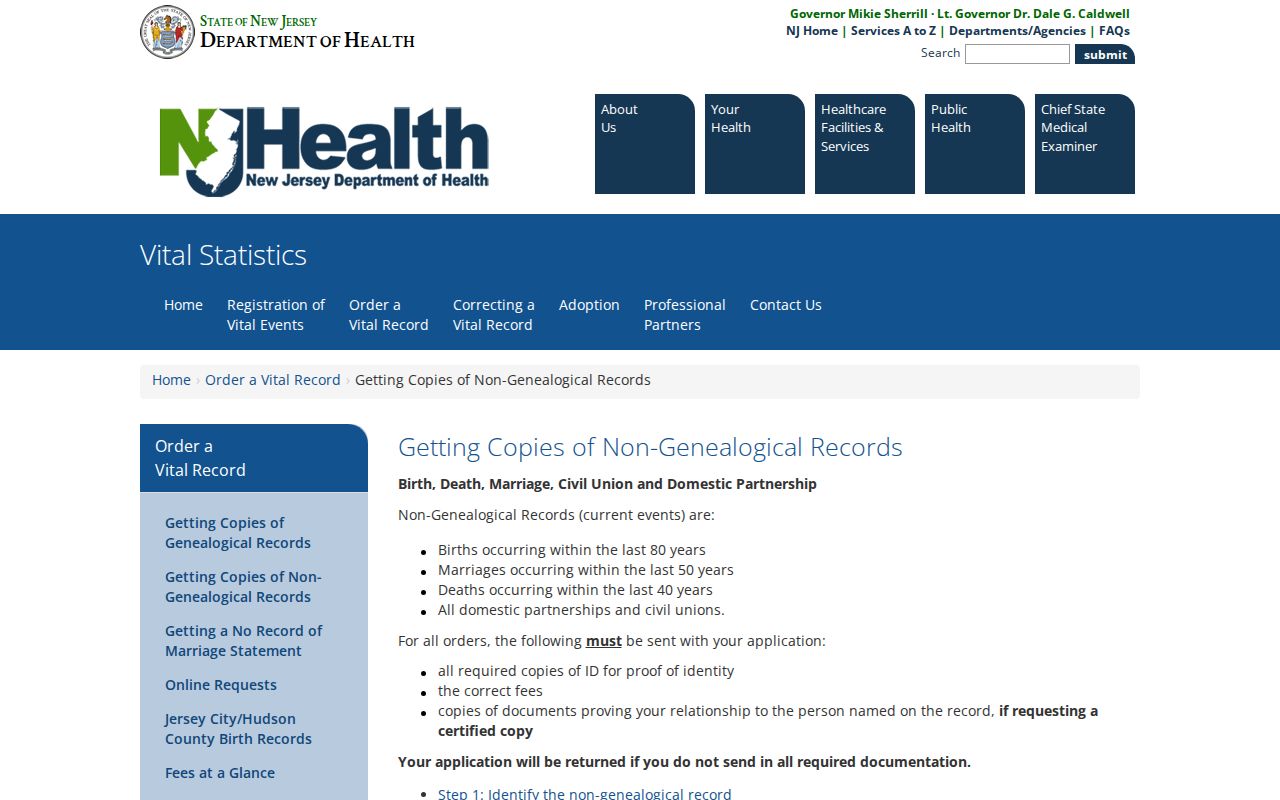
Genealogical access follows different thresholds: births more than 80 years old, marriages more than 50, and deaths more than 40, all subject to the stated rules. A restricted record must never be used to infer a family relationship or to sidestep another person's protection in the Essex County residents directory.
Essex County Resident Lookup in Elections
New Jersey's voter-registration portal points to the "Am I Registered?" check. A registration can flip to inactive when a sample ballot comes back undelivered. An unresolved address question can do the same. That makes the status route handy for election administration. It cannot prove, though, that a person never lived at an address. Treat an absent result as just that: absent.
N.J.S.A. 19:31-18.1 governs who may obtain voter lists. It bars signatures, shields covered-person home addresses, and limits certain solicitation uses. Essex election officials and the County Clerk publish contacts and voter-list materials. The county-specific request form, delivery formats, and fee details should be confirmed with those offices. Confirm them before any request. The public voter list is not the internal statewide registration system.
Search with the exact spelling on the official record. Hyphens, spaces, middle initials, changed surnames, and nicknames all matter. Never publish an account-verification identifier, a signature, a protected address, or completed application data.
Essex County Docket Results
A court result is a docketed event, nothing more. It is not a verdict and not a shortcut to identity. A no-result can mean the wrong court, a spelling slip, the wrong date range, sealed or expunged material, or a system that was never searched. Before describing what a search returned, read the disposition and record the court, case number, party role, filing date, and access status.
Federal matters run through PACER. The PACER pricing guidance lists a $0.10 per-page charge, a $3 cap on most documents, $2.40 for audio, and no fee when a quarterly total stays at $30 or less. Search by case number when you can. A broad party search is far less precise.
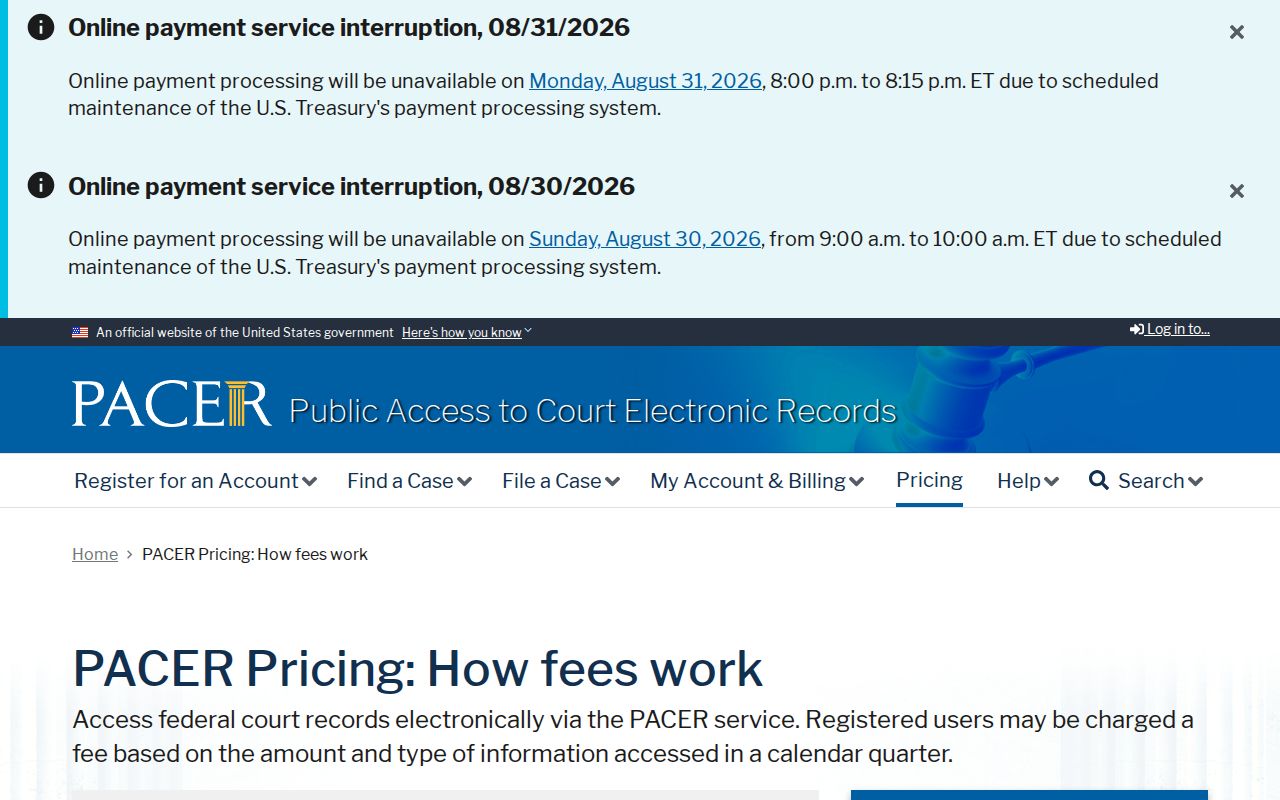
Fees are a practical argument for starting with a known court and case number. They also remind you to preserve the source level. A docket entry, a filed document, and a certified copy are not interchangeable evidence.
Essex County Resident Lookup History
Historical questions deserve dated sources, not current administrative records. Federal census schedules become public after 72 years, so coverage now runs through 1950. A schedule can carry names, ages, household relationships, birthplaces, naturalization status, and other period details. Still, a census is a snapshot. It can be wrong or incomplete. It can also be tied to a ward or enumeration district that no longer matches modern boundaries.
Newark Public Library holdings add city directories, yearbooks, newspapers, maps, photographs, and archival collections. The State Archives contributes historical vital records and Essex naturalizations. It also holds probate material, chancery cases, and county records. A directory-to-census-to-newspaper-to-probate sequence tests a trail while keeping each source's date and role clear. The Essex County city directory holds the collection-specific details for that shelf.
Heir questions call for comparison, not assumption. Check probate names and property descriptions against the Register. Do this before treating a record as proof of a present relationship. Adoption and birth-parent matters belong with the state's official program and its privacy rules.
Essex County Resident Lookup Limits
Protected and missing values demand careful reading. The New Jersey Address Confidentiality Program gives qualifying participants a substitute address. That substitute stands in for state and local agencies. Daniel's Law shields defined officials and their household members. State parcel products may suppress owner names. A blank or redacted address is not proof the record fails to exist.
OPRA, the state's Open Public Records Act, reaches identifiable existing records held by the right custodian. It is not a tool for building a person dossier. An agency need not resolve a same-name match. It need not run a title search or interpret a relationship. Essex County links an online OPRA portal plus a paper request form. The County Clerk points requesters to the proper department or portal.
Lawful use. Use a resident lookup for personal, lawful research and keep sensitive details out of public circulation. New Jersey's stalking law, N.J.S.A. 2C:12-10, is a clear boundary against using records to monitor, threaten, or repeatedly contact anyone.
Corrections start with the custodian who holds the record. Contact that office and preserve the exact source, date, and record identifier. Never try to reverse-engineer a protected field or confront someone at an address.